

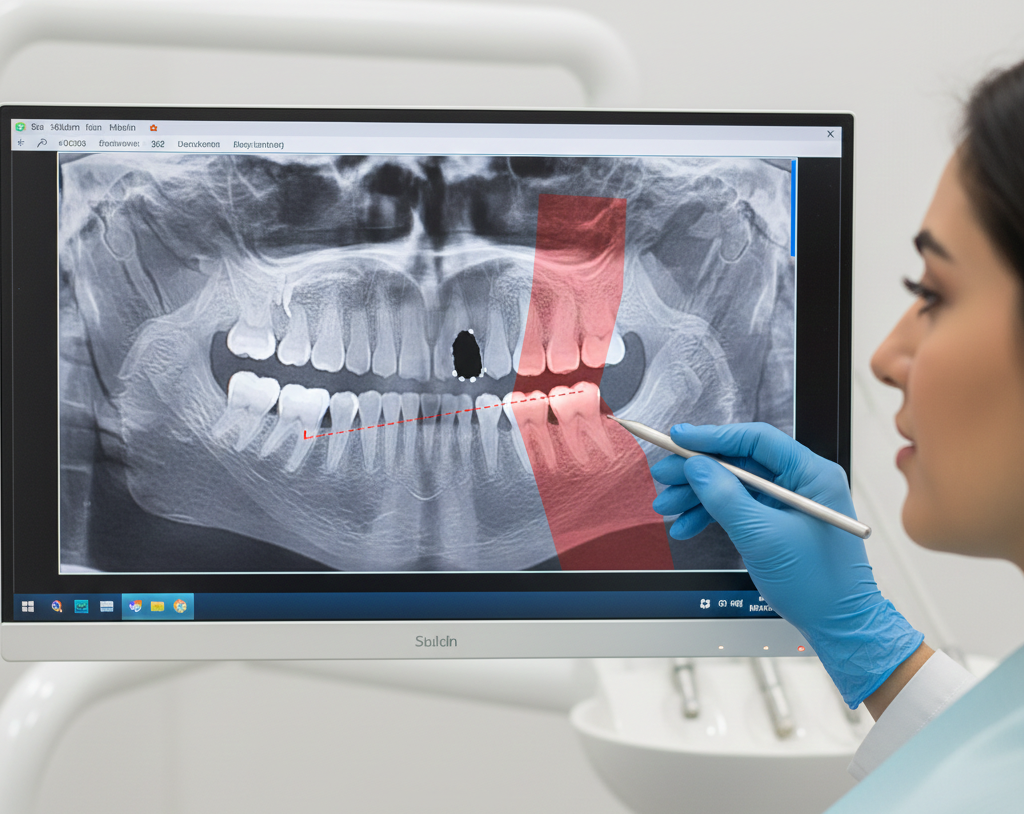
If you’re considering dental implants to replace missing molars or premolars, you may have heard your dentist mention a “Sinus Lift.” Many patients ask about its purpose and necessity. A sinus lift is sometimes required to increase bone height in the upper jaw so implants have sufficient support.
Understanding why it’s needed and what the procedure involves supports informed decision-making regarding your treatment.
Does Every Upper Jaw Implant Require a Sinus Lift?
The short answer is “no”. Not every patient requires a sinus lift. The need for this procedure depends on the volume and density of the existing jawbone.
In the upper back jaw (posterior maxilla), the bone is naturally thinner than in the lower jaw. In addition, the maxillary sinuses (air-filled spaces located above the upper back teeth) are positioned close to the implant area. When enough natural bone height is available to support a dental implant properly without interfering with the sinus membrane (the thin lining inside the sinus cavity), implant placement can proceed without additional procedures.
However, if the available bone height is limited, a sinus lift is required to create adequate bone support for successful implant placement.
Why Does Bone Height Reduce in the Upper Jaw?
As we age, or after tooth loss, bone height in the upper jaw can reduce over time. There are two main reasons:
Bone Resorption:
After a tooth is lost, the jawbone no longer gets regular stimulation (pressure created during chewing). Without this stimulation, the bone slowly loses volume and density, a condition referred to as bone resorption.
Sinus Expansion:
The sinus cavities (air-filled spaces above the upper back teeth) can gradually move downward, which further reduces the amount of available bone needed to support a dental implant.
How Does Al Salam Health Assess the Need for a Sinus Lift?
At Al Salam Health, Al Ain, advanced 3D digital imaging (CBCT scans) is used to evaluate the upper jaw. This imaging provides accurate measurements of bone height, bone quality, and the position of the sinus cavity before implant-related decisions are made.
Adequate Bone Height:
If the available bone height is 10 mm or more, there is usually sufficient bone to proceed with dental implant placement without a sinus lift.
Limited Bone Height:
If the bone height measures between 5 mm and 7 mm or less, a sinus lift may be required to increase available bone height and avoid interference with the sinus cavity (the air-filled space above the upper jaw).
Additional Factors Considered:
Along with bone height, our specialists also review:
- Bone density and overall bone quality
- Size and position of the sinus cavity
- Number and placement of planned implants
- Overall oral health and relevant medical history
Direct and Indirect Sinus Lifts: Which Option Is Suitable?
At Al Salam Health, the surgical approach is selected based on each patient’s anatomical structure and clinical evaluation. Two primary sinus lift methods are used:
Indirect Sinus Lift (Internal Approach)
This option is used when only a small increase in bone height is required. The sinus floor is gently repositioned through the opening used for implant placement. As the procedure involves limited surgical intervention, recovery is generally comfortable, with shorter healing time and minimal impact on daily activities.
Direct Sinus Lift (Lateral Window Approach)
For patients with reduced bone volume, a direct sinus lift may be considered. An opening is made on the side of the upper jaw to reach the sinus membrane. Bone graft material (natural or synthetic bone substitute) is then placed beneath the membrane to increase bone height. This approach provides sufficient bone support for implant treatment.
Can a Sinus Lift Be Avoided When Advised?
If an implant is placed into bone that is too thin, proceeding without a sinus lift is not advisable. This can lead to several concerns:
- Implant Failure: The implant may not properly integrate with the surrounding bone (osseointegration), reducing its ability to remain firmly positioned.
- Sinus-Related Concerns: The implant may reach the sinus lining, which can cause irritation, infection, or ongoing discomfort.
- Reduced Support: If the bone around the implant is insufficient, the implant may loosen or move out of position during normal chewing.
Bone augmentation (a procedure used to increase bone height and support) and sinus lift procedures improve implant stability.
What Is the Recovery Timeline?
Modern surgical methods have made the recovery process more comfortable for most patients. Mild swelling or discomfort is common and usually reduces within 3–5 days.
- Initial Healing: Gum tissue usually heals within 7–10 days.
- Bone Integration: The grafting material slowly integrates with the jawbone over 4 to 9 months, developing into healthy, natural bone.
Although this healing phase requires patience, it provides a stable bone base for implant placement, similar to the support of a natural tooth root, before the final crown or implant-supported overdenture is placed.
Recovery Instructions After a Sinus Lift
To support proper healing of the bone graft and maintain its position, follow these sinus precautions during the first 2–3 weeks:
- Avoid Blowing Your Nose: Pressure from blowing can disturb the graft material. Wipe your nose gently if needed.
- Sneeze with Your Mouth Open: Open your mouth when sneezing to release pressure safely.
- Avoid Using Straws: Drinking through a straw can disturb the surgical site.
- Sleep with Your Head Elevated: Use an extra pillow for the first few nights to reduce swelling and sinus pressure.
Expert Dental Implant Care in Al Ain
At Al Salam Health, our dental implant specialists evaluate your jawbone and oral anatomy to determine the need for sinus lifts, bone grafts, or other preparatory procedures. We provide precise, personalized treatment planning to support accurate implant placement and long-term implant success.
For appointments or inquiries, call +971 3 764 6510 or email newalsalam@alsalamhealth.ae.