

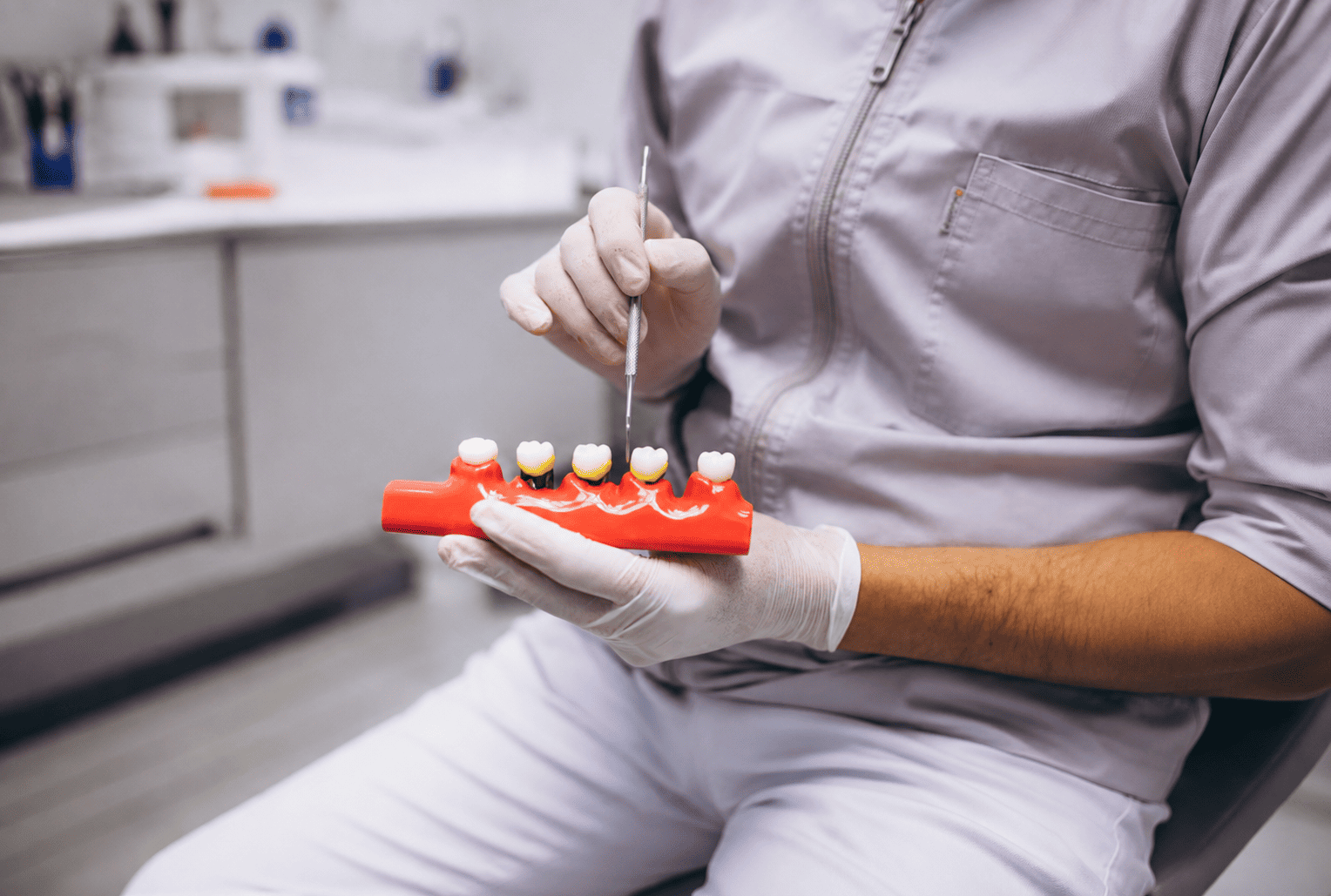
Dental implants are a common treatment for replacing missing teeth, but problems can occur around an implant due to infection, loss of supporting bone, failure of integration with the jawbone, excessive bite pressure, or other clinical conditions. The condition of the implant and the surrounding tissues determines which treatment may be suitable.
A failed dental implant should be evaluated by an implant specialist, periodontist, or oral surgeon before removal or replacement is considered. The evaluation includes an examination of the implant, gums, and surrounding bone, along with dental imaging when required. The findings can show the cause of the problem and whether the implant requires treatment, removal, or replacement after the area has healed.
What Is Considered a Failed Dental Implant?
A dental implant may be considered unsuccessful when it becomes loose, loses supporting bone, develops an infection, or can no longer support the replacement tooth properly. Implant problems can develop during the healing period or after the implant has been in use.
Early Implant Failure
Early problems occur during the healing period, before the implant becomes firmly connected with the jawbone. Failure of bone integration (when the jawbone does not form a stable connection with the implant) can leave the implant loose. Infection around the implant site or excessive movement of the implant during healing can also affect the outcome.
Late Implant Failure
Late problems develop after the implant has already been in place and supporting a dental restoration. Peri-implant disease (inflammation and infection affecting the tissues around an implant) can cause bone loss and reduce the support around the implant. Damage to implant components, such as the implant screw, connecting parts, or crown, can also create problems. Excessive biting forces from teeth grinding or an uneven bite may place too much pressure on the implant and surrounding tissues.
Not every loose, painful, or uncomfortable implant has the same underlying problem. A detailed assessment is required to determine the actual cause.
What Can Cause a Dental Implant to Fail?
Problems with dental implants can have different causes, including infection, changes in the surrounding bone and gums, problems during healing, excessive pressure, or difficulties with the implant or its restoration. Identifying the specific cause is important when assessing an implant problem.
Peri-Implant Infection
Infection around an implant can affect the gums and bone that surround and support it. Peri-implant mucositis (inflammation of the soft tissue around an implant) mainly affects the gums without bone loss. If the condition progresses to peri-implantitis (inflammation around an implant accompanied by loss of supporting bone), the stability of the implant can be affected.
Bone Not Joining Properly With the Implant
An implant needs to become firmly connected to the surrounding jawbone during healing. If this connection does not develop properly, the implant may remain loose or become unstable. In such cases, the implant may need to be removed and the area assessed before another treatment is considered.
Bone Loss Around the Implant
The bone supporting an implant can gradually decrease due to peri-implantitis, excessive bite pressure, poor oral hygiene, or other conditions affecting the surrounding tissues. When too much bone is lost, the implant may not have enough support to remain stable. Additional treatment may be required before an implant can be replaced.
Excessive Bite Forces
Teeth grinding, clenching, an uneven bite, or strong pressure during chewing can place too much force on an implant and its restoration. This can damage the implant, connecting components, or crown and may affect the stability of the treatment.
Poor Oral Hygiene
Plaque buildup around an implant can irritate the surrounding gums and increase the risk of inflammation and infection. Regular brushing, flossing, professional cleaning, and dental check-ups are important for keeping the gums and tissues around the implant healthy.
Smoking, Medical Conditions, and Medications
Smoking can interfere with healing and affect the gums and bone around a dental implant. Certain medical conditions and medications may also affect healing and the health of the tissues around the implant. These details should be reviewed before and during implant treatment to plan the appropriate care for each patient.
Can a Failed Dental Implant Be Replaced?
In many cases, a failed dental implant can be replaced, but the area usually needs treatment and healing before another implant is placed.
The first step is to identify the reason for the implant problem and treat any infection, inflammation, bone loss, or other dental concern. Depending on the condition of the implant, it may need to be removed before the area can heal.
Replacement may be considered when:
• The failed implant has been removed, if necessary
• Any infection or inflammation has been treated
• The gums have healed
• Enough jawbone is available to support another implant
• Any required bone grafting or bone-building treatment has been completed
• The reason for the previous implant problem has been treated
• The patient’s overall oral health is suitable for another implant
The time needed before replacement depends on the condition of the gums and jawbone and the treatment required before placing another implant.
How Is a Failed Implant Assessed?
Assessment of a dental implant includes an examination of the implant, surrounding gums, bite, and dental restoration. An implant specialist, periodontist, or oral surgeon may assess the implant depending on the condition and treatment required.
The assessment may include:
Implant Stability
The dentist checks whether the implant is firmly held in place. An implant that moves may indicate a problem with the connection between the implant and jawbone or a loss of bone around the implant.
Gum Condition
The gums around the implant are checked for redness, swelling, bleeding, tenderness, or other signs of inflammation or infection.
Supporting Bone
The dentist checks the bone around the implant for any loss or changes. The condition of the bone is important when deciding whether the existing implant can remain in place or whether another implant may be possible later.
Bite and Pressure
The dentist checks how the teeth meet during biting and chewing. Teeth grinding, clenching, an uneven bite, or heavy pressure on the implant can place stress on the implant and its restoration.
Dental Imaging
Digital dental X-rays can show the implant and the bone around it. In more complex cases, CBCT imaging provides detailed 3D images of the jawbone, implant, and surrounding structures, which can be useful when assessing the implant and planning further treatment.
What Happens Before Implant Replacement?
Before another implant is placed, any problem affecting the previous implant and the surrounding tissues needs to be treated first.
If infection or inflammation is present, periodontal treatment may be required to treat the gums and surrounding tissues. If bone loss has occurred around the previous implant, additional treatment may be needed to increase the available bone before another implant can be placed.
When there is not enough jawbone to support an implant, bone augmentation (treatment used to increase the amount of bone in an area) or bone grafting (placing bone material to support new bone growth) may be recommended. The type of treatment depends on the amount of bone present and the area requiring treatment.
Once the gums and jawbone are suitable for another implant, the dental team assesses the teeth, bite, bone, and overall oral health before deciding how the replacement implant should be placed.
Can the Same Implant Site Be Used Again?
A previous implant area may be suitable for another implant after the failed implant has been removed and the tissues have healed. After healing, the dentist assesses the gums and jawbone around the previous implant. If the bone and surrounding tissues are healthy enough to support another implant, replacement may be possible.
If bone loss has occurred, additional treatment may be required before another implant is placed. This may include periodontal treatment or bone grafting, depending on the condition of the area. The decision to place another implant is based on the condition of the gums and jawbone, the cause of the previous implant problem, and the patient’s overall oral health.
How Can the Risk of Implant Failure Be Reduced?
Good oral care and regular dental monitoring are important for maintaining the health of tissues around dental implants. Before implant treatment, the gums, teeth, bite, and jawbone should be assessed and any existing dental problems should be treated.
Important steps include:
• Treating gum disease before implant placement
• Maintaining good brushing and flossing habits
• Following the dentist’s instructions after implant surgery
• Attending regular dental and implant check-ups
• Managing teeth grinding or clenching when necessary
• Avoiding smoking
• Treating bite problems that place excessive pressure on the implant
• Monitoring the gums, jawbone, implant, and restoration during follow-up visits
Regular dental visits include checking the gums, jawbone, implant, and restoration for any changes that may require treatment.
Dental Implant Assessment at Al Salam Health
At Al Salam Health, Al Ain, dental implant treatment is based on the patient’s oral health, jawbone condition, gum health, bite, and specific dental needs. Patients with a previous implant problem can receive a detailed assessment of the implant, surrounding gums, and jawbone to find the cause of the problem and determine the appropriate treatment.
Our dental team provides dental implant, periodontal, and oral surgical care, with diagnostic imaging such as digital X-rays and CBCT available when required to examine the implant and surrounding structures.
A failed dental implant can be replaced in suitable cases. The assessment determines whether the implant needs to be removed, whether treatment is required for the gums or jawbone, and whether another implant or a different tooth replacement option is appropriate.