

Orthodontic problems such as overbite, crowded teeth, and gaps between teeth can affect both smile appearance and oral health. Misaligned teeth may make cleaning difficult, increase the risk of plaque build-up, and interfere with chewing and speech. Many patients prefer a treatment option that is less noticeable than traditional metal braces and consider whether invisible braces can correct these problems.
Invisible braces (clear aligners) have become a popular orthodontic option for teenagers and adults. However, clear aligners are not suitable for every case, and treatment outcomes depend on the severity of the condition and its underlying cause. In many cases, clear aligners can successfully correct tooth alignment, while more complex cases may require additional orthodontic treatment.
Understanding Invisible Braces
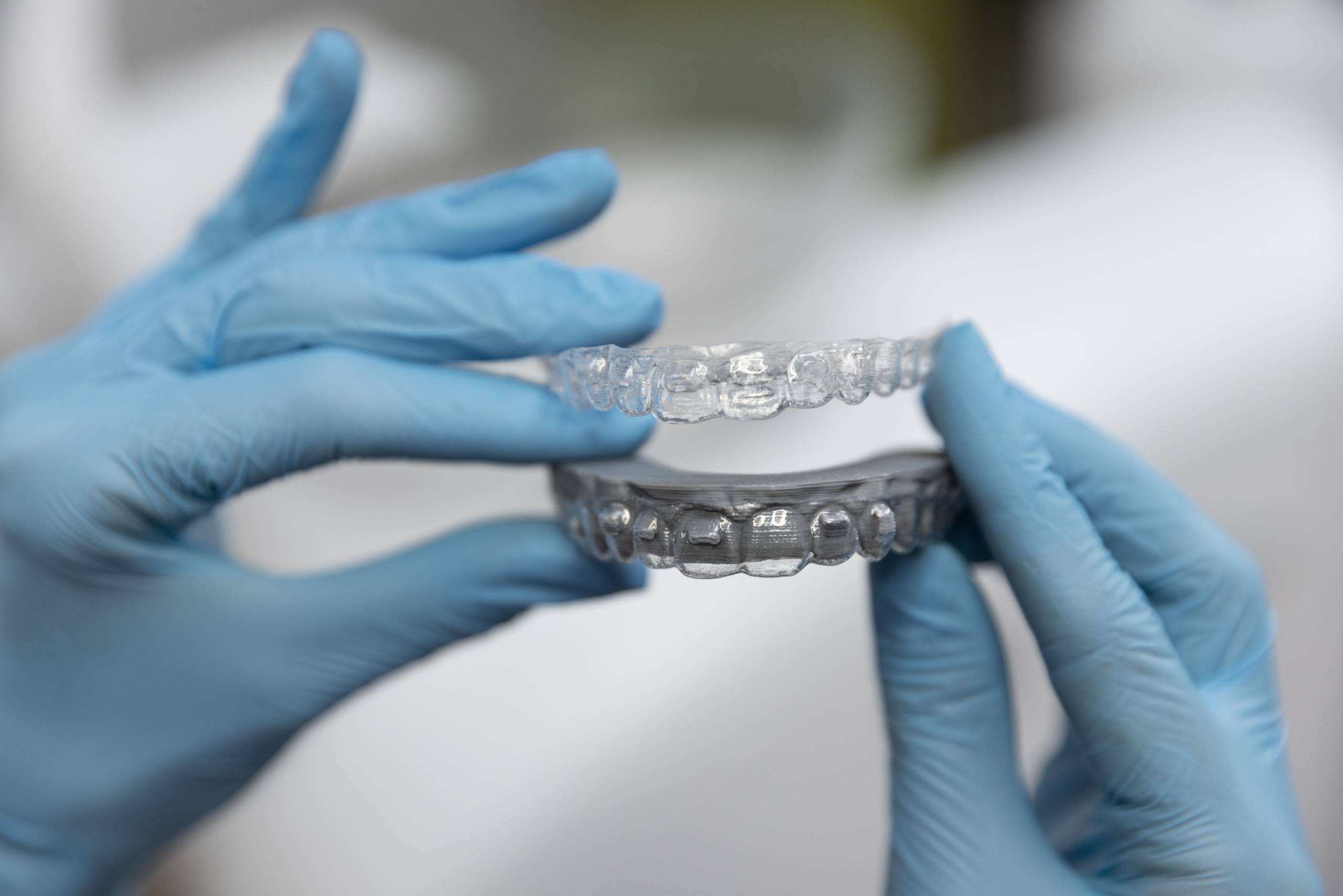
Invisible braces are removable, transparent plastic trays custom-made to gradually guide teeth into their intended positions. Each set of aligners is worn for a specified period before being replaced with the next set in the series.
Unlike traditional braces, invisible braces consist of clear aligner trays rather than metal brackets or wires. Because they are nearly invisible and removable, they are commonly chosen by patients who prefer a less visible orthodontic treatment option.
Treatment begins with a 3D digital scan of the teeth, providing detailed measurements of the teeth and bite. Based on this assessment, a series of custom-made aligner trays is created. Patients typically wear each set for one to two weeks before progressing to the next aligner in the sequence.
For the best results, aligners should be worn for 20 to 22 hours per day and removed only for eating, drinking, brushing, and flossing.
Can Invisible Braces Correct an Overbite?
An overbite occurs when the upper front teeth overlap the lower front teeth more than normal. The severity of the overbite largely determines whether clear aligners are a suitable treatment option.
Mild to Moderate Overbite
In many mild to moderate cases, invisible braces can improve the bite and tooth alignment. Treatment may include attachments (small tooth-coloured shapes bonded to specific teeth) to give the aligners additional grip during treatment. Elastics (orthodontic rubber bands worn between the upper and lower teeth) may be used to support bite correction.
Severe Overbite
When an overbite is related to the position or development of the jaw rather than tooth alignment, aligners may not provide enough correction. These cases may require traditional braces (metal brackets and wires attached to the teeth), orthodontic appliances (devices such as palate expanders or bite-correcting appliances), or multiple treatment approaches to improve bite alignment and maintain the results over time.
Can Invisible Braces Correct Crowded Teeth?
Crowded teeth develop when there is insufficient space in the jaw (the upper or lower jaw does not have enough space to accommodate all teeth in proper alignment). Teeth may overlap, rotate, or become difficult to clean, increasing the risk of plaque accumulation and gum problems.
Mild to Moderate Crowding
Clear aligners can correct many cases of mild and moderate crowding. Treatment may involve slight expansion of the dental arch (the curved arrangement of teeth in the upper or lower jaw) or interproximal reduction (a procedure that creates a small amount of space by reshaping the sides of selected teeth).
Severe Crowding
Severe crowding may require additional space before teeth can be aligned properly. In some cases, tooth extraction or a phase of traditional braces (metal brackets and wires attached to the teeth) may be recommended before or alongside aligner treatment.
Can Invisible Braces Correct Gaps Between Teeth?
Spacing between teeth is one of the most common reasons patients choose clear aligners. Gaps may occur naturally or develop because of differences in tooth size, missing teeth, or jaw structure.
Small to Moderate Gaps
Small and moderate spaces can usually be corrected with clear aligner treatment. Teeth are gradually repositioned to close the spaces and improve overall alignment.
Large or Multiple Gaps
Wider spaces or multiple gaps may require a longer treatment period and a more detailed assessment of tooth movement and spacing. In many cases, these can still be corrected with aligners, sometimes with the use of attachments (small tooth-coloured shapes bonded to specific teeth) to support tooth movement.
Other Bite Problems That Invisible Braces Can Correct
In addition to overbite, crowding, and spacing, invisible braces can also be used for:
Underbite
An underbite is a condition where the lower teeth extend in front of the upper teeth. Mild and moderate cases can sometimes be corrected with aligners, depending on the underlying cause.
Crossbite
A crossbite is present when some upper teeth bite inside the lower teeth. Correcting a crossbite can improve chewing and reduce uneven tooth wear.
Open Bite
An open bite is a condition where there is a gap between the upper and lower front teeth when the teeth are in a closed position. Certain cases can be treated with clear aligners when the condition is suitable for aligner-based treatment.
How Is Treatment Suitability Determined?
Whether invisible braces are the right option depends on a detailed orthodontic evaluation rather than a general assumption.
At Al Salam Health, this assessment may include:
• Clinical examination of the teeth, gums, and bite
• Digital scans, photographs, and X-rays
• Evaluation of tooth position and jaw alignment
• Assessment of whether the problem is limited to tooth alignment or involves the underlying jaw structure
• Discussion of treatment duration and expected outcomes
These findings determine whether treatment can be completed with clear aligners or whether other orthodontic treatments should be considered.
When Additional Treatment May Be Required
Some orthodontic problems are too complex for aligner-only treatment. This does not mean treatment is not possible. Instead, more than one orthodontic method may be recommended to improve treatment outcomes.
Treatment options may include:
• A short phase of traditional braces (metal brackets and wires attached to the teeth) followed by clear aligners
• Orthodontic appliances (devices such as palate expanders or bite-correcting appliances) used together with aligners
• Tooth extraction in cases of severe crowding
• Changes to the treatment process based on tooth movement and progress
The priority is correcting the bite and tooth alignment in the most appropriate way for the individual case.
Orthodontic Treatment at Al Salam Health
At Al Salam Health, our team of orthodontic specialists provide treatment for crowded teeth, spacing problems, and bite irregularities. Treatment recommendations are based on an evaluation of tooth alignment, jaw alignment, and overall oral health.
Available orthodontic treatments include:
• Metal Braces
• Ceramic Braces
• Self-Ligating Braces
• Damon Braces
• Clear Aligners / Invisalign
• Functional Appliances
• Essix Retainers
• Fixed Retention
• Face Mask Therapy
• Maxillary Expansion
Choosing the Right Orthodontic Treatment
Not every patient requires the same type of orthodontic treatment. While clear aligners are often suitable for mild to moderate overbite, crowding, and spacing, some patients may require traditional braces (metal brackets and wires attached to the teeth) or multiple treatment methods, depending on the underlying cause and severity of the condition.
A clinical evaluation is used to determine the most appropriate treatment option based on tooth alignment, bite condition, and overall treatment requirements.