

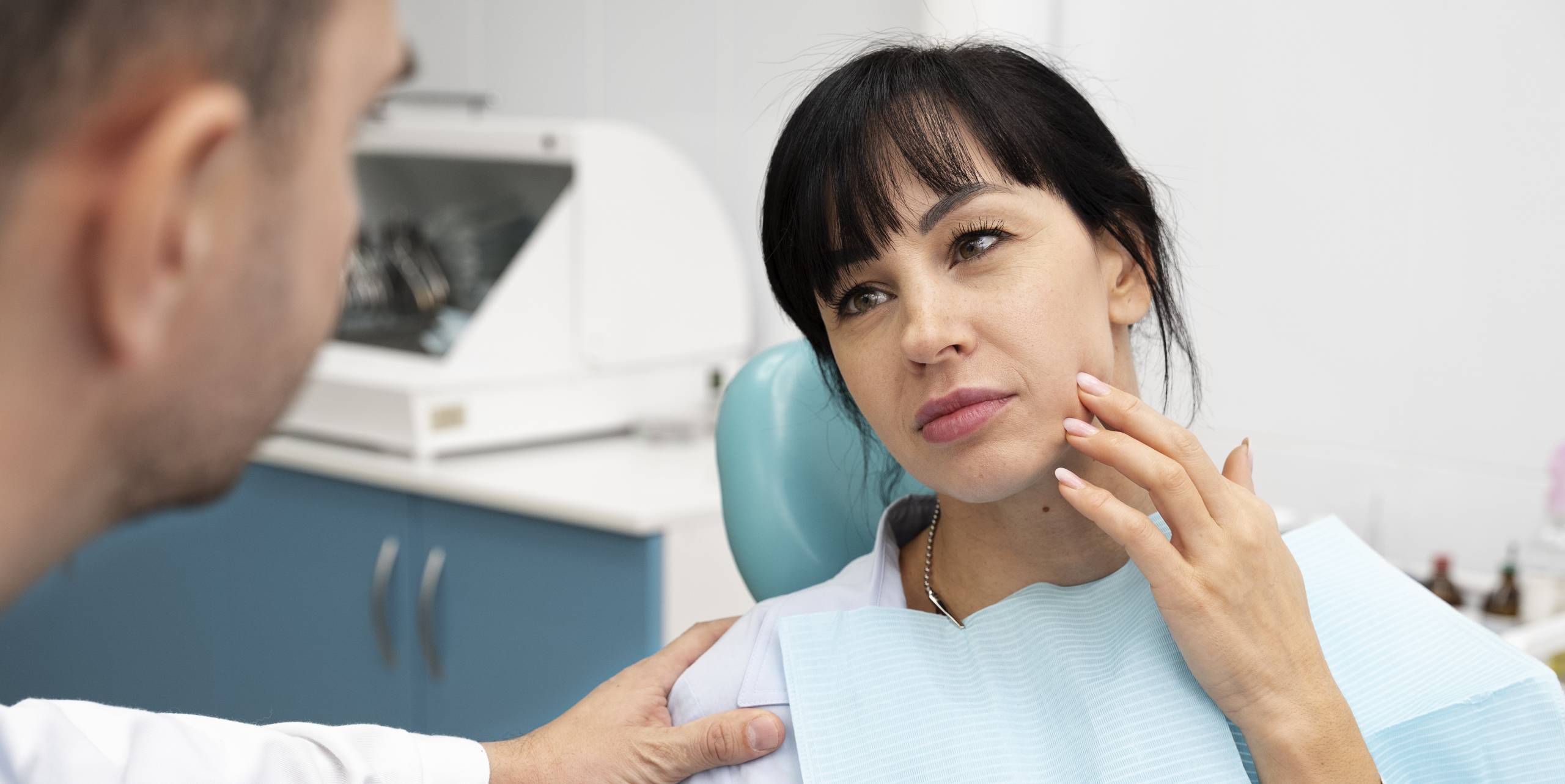
Jaw clicking, locking, or pain may be related to the temporomandibular joint (TMJ), which connects the lower jaw to the skull. The TMJ and the surrounding muscles are used when chewing, speaking, yawning, and opening or closing the mouth.
When the joint, disc, bite, or nearby muscles are under strain, the jaw may not open and close as it should. This can cause clicking sounds, limited mouth opening, stiffness, or pain during normal daily activities.
Understanding the cause is important because not every TMJ-related problem needs the same type of treatment.
Causes of Jaw Clicking, Locking, or Pain
1) Teeth Grinding and Clenching
Grinding or clenching the teeth puts repeated strain on the jaw joint and the surrounding muscles. This often happens during sleep, but it can also happen during stress without the person being fully aware of it.
When this continues over time, it can cause muscle tightness, jaw fatigue, morning soreness, headaches, and discomfort around the joint area. In some patients, long-term clenching or grinding may also cause jaw clicking, stiffness, or pain while chewing.
2) Disc Position Changes Inside the Joint
Inside the TMJ, there is a small cushioning disc between the jawbone and the skull. This disc provides support inside the joint and helps the jaw open and close with less strain on the surrounding structures.
If the disc changes from its normal position, the jaw may make a clicking or popping sound during opening and closing. In some cases, this can make it harder to open the mouth fully and may cause the jaw to feel stiff or temporarily stuck. This is one reason some patients experience jaw locking or sudden difficulty moving the jaw normally.
3) Repeated Jaw Strain from Daily Habits
Some everyday habits can put extra strain on the jaw joint and the surrounding muscles. These habits may seem minor, but when they happen often, they can increase pressure on the joint over time. Common examples include:
- Chewing gum for long periods
- Biting nails
- Chewing ice
- Eating very hard foods frequently
- Keeping the mouth open for a long time during dental treatment
When these habits continue regularly, the jaw joint and nearby muscles may become irritated. Over time, this may cause pain, muscle tightness, clicking sounds, or discomfort while chewing and opening the mouth.
4) Jaw Injury and Trauma
A direct blow to the jaw, such as from a punch, fall, or sports-related incident, can strain the jaw joint, the surrounding muscles, or the disc inside the joint.
After an injury, some patients notice jaw pain, stiffness, clicking, difficulty opening the mouth fully, or a change in the way the jaw opens and closes. In some cases, these symptoms are noticed soon after the injury, while in others, the symptoms may not be noticed until later.
5) Bite Problems and Jaw Joint Strain
When the upper and lower teeth are not aligned properly during biting, the jaw may not close in a stable and comfortable position. This can put extra strain on certain areas of the jaw joint and the surrounding muscles.
Over time, this uneven pressure can cause jaw discomfort, muscle fatigue, or changes in how the jaw opens and closes. In some patients, bite problems can be one of the reasons for ongoing TMJ pain, clicking, or stiffness.
6) Stress-Related Muscle Tension
Stress can cause muscle tightness in the jaw, face, neck, and temple area. Some people remain tense in these areas throughout the day without realizing it, while others may grind or press their teeth together during sleep.
Ongoing muscle tension can cause:
- Jaw soreness
- Facial tightness
- Headaches
- Difficulty opening the mouth comfortably
- Pain while chewing
In many TMJ-related conditions, muscle strain can be an important reason for pain and stiffness, even when there is no serious damage inside the joint.
Common Signs of a TMJ-Related Problem
TMJ-related symptoms do not appear the same in every patient. Some people only notice clicking, while others may experience pain, stiffness, or difficulty opening the mouth fully.
Common signs include:
- Clicking or popping sounds when opening or closing the mouth
- Difficulty opening the mouth fully
- Jaw locking in an open or closed position
- Pain while chewing, talking, or yawning
- Stiffness in the jaw, especially after waking up or after long periods of rest
- Facial soreness or discomfort around the joint area
- Headaches, especially around the temples
- Ear discomfort or a feeling of pressure near the ears
If these symptoms happen repeatedly or begin to interfere with eating, speaking, or other daily activities, the jaw joint and surrounding muscles should be checked by a dental specialist.
How the Cause of TMJ Problems Is Identified
TMJ evaluation involves more than checking for a clicking sound. The main purpose is to find out whether the problem is coming from the joint, the disc inside the joint, the surrounding muscles, the bite, or more than one of these areas.
During the dental consultation, the specialist may check:
- How wide the mouth opens
- Whether the jaw moves to one side while opening
- Whether clicking or locking happens while opening and closing the mouth
- Pain or tightness in the jaw and facial muscles
- The condition of the bite and how the upper and lower teeth align during biting
- Signs of grinding or clenching, such as tooth wear
If needed, additional imaging may be advised for a clearer view of the jaw joint and the surrounding structures.
Treatment for TMJ-Related Jaw Pain and Locking
TMJ treatment is planned based on the underlying cause of the disorder. A patient with muscle-related jaw pain may need a different approach from someone with disc-related jaw locking or bite-related joint strain.
1) Occlusal Splints
Custom-made occlusal splints are commonly recommended when teeth grinding, clenching, or pressure on the jaw joint is affecting comfort and jaw function. These appliances are usually worn over the teeth at night.
An occlusal splint can:
- Reduce pressure on the jaw joint
- Lower the strain caused by grinding and clenching
- Reduce muscle tension in the jaw area
- Make the jaw feel more comfortable during sleep and after waking up
For many patients, an occlusal splint can be a useful non-surgical option for reducing jaw pain, clicking, or muscle-related TMJ discomfort.
2) Muscle-Related Treatment
When muscle tightness is one of the main reasons for jaw pain or stiffness, treatment is given to relax the jaw and facial muscles and reduce the strain causing discomfort.
Depending on the patient’s condition, treatment can include:
- Trigger point injections
- Muscle relaxation techniques
- Warm compresses
- Advice on reducing daytime clenching
- Pain relief measures when needed
This approach can be useful for patients who experience jaw pain, facial tightness, or headaches related to muscle strain.
3) Habits That Can Increase TMJ Discomfort
Certain everyday habits can put extra strain on the jaw joint and surrounding muscles, which can make TMJ symptoms more frequent or more uncomfortable. Avoiding these habits can reduce stress on the joint and make the jaw feel more comfortable over time.
Patients are often advised to avoid:
- Excessive gum chewing
- Biting pens, nails, or hard objects
- Chewing ice
- Very hard or very chewy foods when the jaw is already painful
- Keeping the teeth pressed together or the jaw muscles tense even when not eating or speaking
Although these habits may seem minor, avoiding them can reduce irritation in the joint and support better jaw comfort during daily activities.
4) Jaw Exercises for Better Jaw Comfort
In some TMJ cases, guided jaw exercises may be recommended to reduce stiffness, improve how comfortably the jaw opens and closes, and support better jaw comfort during daily use. These exercises can be useful when the jaw joint or surrounding muscles feel tight or strained.
Jaw exercises should be recommended based on the patient’s condition and should not be started without proper dental advice. This is especially important when jaw locking, severe pain, or difficulty opening the mouth fully is already present.
5) Bite-Related Treatment and Dental Correction
If the bite is uneven, or if certain teeth are putting extra pressure on the jaw during biting or chewing, treatment may include orthodontic care or restorative dental procedures. These treatments are considered when the way the teeth align is adding strain to the jaw joint or surrounding muscles.
Depending on the patient’s condition, treatment may include:
- Bite adjustment in selected cases
- Orthodontic treatment to improve tooth alignment
- Restorative treatment for worn or damaged teeth
- Replacement of missing teeth when they are affecting jaw support during biting
This type of treatment may be advised when bite-related strain is one of the reasons behind ongoing TMJ symptoms.
6) Advanced TMJ Treatment for Severe Jaw Issues
Some TMJ cases are mild and improve with splints, muscle care, habit adjustments, and guided jaw exercises. In more serious cases, repeated jaw locking, severe pain, long-standing disc problems, or significant difficulty opening the mouth require advanced treatment under specialist care.
TMJ specialists evaluate the joint, muscles, disc, and bite to determine the appropriate treatment approach and improve jaw comfort.
When to Consult a TMJ Specialist
Jaw clicking, locking, or discomfort should be evaluated if you notice any of the following:
- Occurs regularly or repeatedly
- Worsens over time
- Includes episodes of the jaw getting stuck
- Makes it difficult to open the mouth fully
- Causes pain while chewing, speaking, or yawning
- Comes with frequent headaches, facial tension, or ear-area discomfort
Even a painless click can be important if it happens often or changes over time. Early evaluation can prevent the condition from becoming more difficult to manage.
TMJ Evaluation and Treatment at Al Salam Health
At Al Salam Health, Al Ain, TMJ-related conditions are evaluated by experienced TMJ specialists.
Based on the findings, treatment may include occlusal splints, muscle-related procedures, habit guidance, jaw exercises, or bite-related dental treatment, depending on what is most suitable for the condition.
Early evaluation can prevent a mild clicking problem from developing into ongoing pain, repeated locking, or long-term jaw discomfort.
For appointments or inquiries, call +971 56 549 8501 or email newalsalam@alsalamhealth.ae.