Orthodontic Correction of Spacing and Protruding Teeth
Patient Clinical Profile
- Patient Name: — Tigist
- Gender: — Female
- Age: — 37 Years
Issues Faced by the Patient
The patient consulted at Al Salam Health with the following concerns:
• Daily Difficulties:
Difficulty in biting and chewing food, with food getting stuck between spaces
Mild difficulty while speaking
- Difficulty in closing lips properly, with strain in the chin area
- Habit of tongue thrusting
• Smile-Related Concerns:
Visible spacing between teeth affecting smile appearance
Forwardly placed front teeth with increased visibility
- Self-consciousness while smiling and speaking
• Oral Condition Concerns:
Gum inflammation and plaque build-up in spaced areas
Reduced bone support in certain regions
- Higher risk of injury and surface damage in forwardly placed teeth
- Jaw discomfort related to bite imbalance
Attending Doctor: Dr. Bijitha P Nair, Specialist Orthodontist
Before Treatment (Initial Assessment)
An initial orthodontic assessment evaluated dental alignment, bite, and overall oral condition.
Records Used:
OPG X-Ray
Lateral Cephalogram
Consultation & Advanced Diagnostics
A detailed orthodontic consultation reviewed the patient’s dental condition and medical history.
Diagnostics Used:
Clinical orthodontic examination
Bite and occlusal assessment
- Photographic analysis
Additional Records:
Dental models (alginate impressions)
Intraoral photographs
- Extraoral photographs
Clinical Findings:
The examination showed the following:
Extraoral Findings:
Mesofacial pattern
- Incompetent lips
- Incompetent lips
Intraoral Findings:
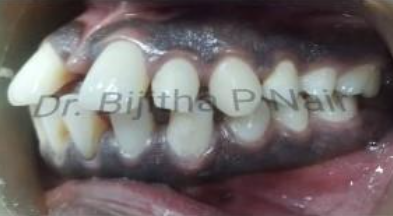
Angle’s Class I molar relationship
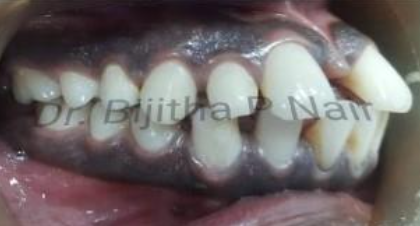
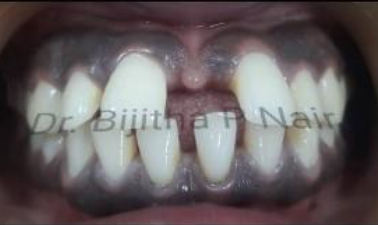
- Excessive spacing in upper and lower teeth
- Forwardly placed upper and lower front teeth
- Trauma from occlusion
- Rotation in teeth (#6, #11, #13)
- Tongue thrusting habit present
- High labial frenum attachment
Treatment Procedure
Orthodontic Treatment for Spacing and Proclination Correction
• Treatment Modality: Fixed orthodontic braces (PEA system)
• Total Treatment Duration: 20 months
Phase 1: Initial Alignment
Upper and lower orthodontic appliances were placed
Initial levelling and alignment of teeth progressed
- A non-extraction approach was used and reviewed during treatment
Phase 2: Space Closure and Tooth Position Correction
Controlled movement of teeth closed the spaces
Tooth position corrected using controlled tipping and torque
- Alignment improved without the need for tooth extraction
Phase 3: Soft Tissue Correction
Labial frenectomy to prevent spacing from reopening
Phase 4: Final Finishing and Stabilization
Final adjustments refined alignment and bite
Retention protocol advised to maintain the results
Challenges in the Case
Excessive spacing in the upper arch compared to the lower arch, which could have required lower arch extraction. The patient preferred to avoid extraction, and space closure was managed using controlled tooth movement without removing any teeth.
- Presence of a thick, fibrous labial frenum, which can cause spaces to reopen after treatment. Frenectomy was included to prevent reopening of spaces, and the patient was advised on the retainer protocol to maintain the results.
The treatment was provided under the care of Dr. Farijan Abdul Latheef, Specialist Orthodontist, with 8.5 years of clinical experience.
Post-Treatment Instructions
Use retainers as advised to maintain alignment
Avoid habits such as tongue thrusting
- Attend scheduled follow-up visits
After Treatment (The Result)
After completion of orthodontic treatment, the patient showed:
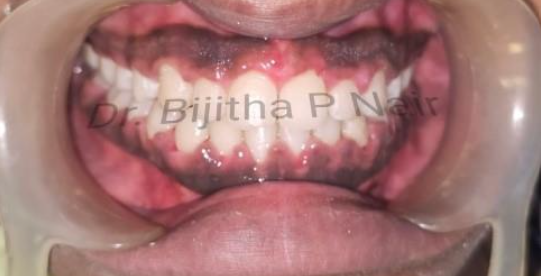
Closure of spaces between teeth
- Proper alignment of teeth
- Improved bite and chewing function
- Better lip closure without strain
Patient Feedback
“Before starting my orthodontic treatment, I was very self-conscious about the excessive spacing and forward position of my teeth. Smiling in photos and speaking was always a challenge for me. From the very first consultation, my doctor, Dr. Bijitha P Nair, explained my condition clearly and made me feel comfortable throughout the process.
As the treatment progressed, I could see improvements over time. Today, the spacing has been completely corrected, my teeth are properly aligned, and my smile looks natural. The change has improved my appearance and comfort while speaking and chewing.
I am very happy with the results and grateful for the care and attention I received.”